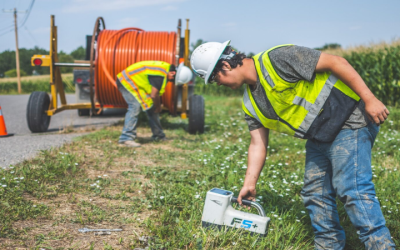
The demand for high-speed, dependable internet has never been greater. From streaming entertainment to remote work and online education, modern life relies on seamless connectivity at every turn. Meeting this demand requires a robust infrastructure that can transmit massive amounts of data quickly and securely across vast distances. This is where Long haul fiber companies play a pivotal role, as they form the backbone of the nation’s digital communications network.
The Backbone of National Connectivity
Long-haul fiber networks consist of extensive fiber optic cables that span hundreds or even thousands of miles, linking cities, states, and rural areas. Unlike local fiber connections that serve individual homes or neighborhoods, these long-haul systems are responsible for moving data between distant locations at lightning-fast speeds. By connecting major data centers, internet exchange points, and service providers, these networks ensure that information can flow freely across the country without interruption.
How Fiber Optic Technology Enables Reliability
Fiber optic cables use pulses of light to transmit data, resulting in several key advantages over traditional copper wiring:
• Higher Bandwidth: Fiber optics can carry significantly more data than copper, supporting the ever-growing needs of businesses and consumers.
• Lower Latency: The speed of light transmission means faster data delivery with minimal delays, which is crucial for real-time applications like video calls and online gaming.
• Reduced Signal Loss: Over long distances, fiber optic signals experience far less degradation than electrical signals in copper wires, maintaining quality and reliability.
• Immunity to Electromagnetic Interference: Fiber cables are not affected by electrical noise, making them more stable in environments with heavy machinery or power lines.
These benefits make fiber optics the preferred choice for long-haul networks, ensuring that internet traffic remains fast and dependable from coast to coast.
Expanding Access and Bridging the Digital Divide
One of the most significant challenges facing the United States is providing reliable internet to underserved rural and remote areas. Long-haul fiber networks are essential in bridging this digital divide. By extending high-capacity fiber routes into less populated regions, these networks enable local providers to connect more communities, schools, and businesses.
This expansion supports economic growth, educational opportunities, and healthcare access by delivering the same high-speed connectivity enjoyed in urban centers. As a result, more Americans can participate in the digital economy, regardless of their location.
Supporting Emerging Technologies and Future Growth
The role of long-haul fiber extends beyond current internet needs. As technologies like 5G, cloud computing, and the Internet of Things (IoT) become more widespread, the demand for reliable, high-capacity data transport will only increase. Long-haul fiber networks are designed to scale, allowing for easy upgrades and future-proofing the nation’s digital infrastructure.
Additionally, these networks provide the foundation for critical services such as emergency communications, smart transportation systems, and advanced manufacturing, all of which depend on uninterrupted, real-time data exchange.
The Road Ahead for Reliable Internet
Reliable internet connectivity is fundamental to modern life, and the infrastructure that supports it must be robust, scalable, and resilient. Long-haul fiber networks, powered by advanced optical technology and strategic deployment, are making this possible across the United States. By bridging vast distances and connecting diverse regions, these networks ensure that fast, stable internet is accessible to more Americans than ever before. As the digital landscape continues to evolve, the importance of these fiber-optic backbones will only grow, supporting the nation’s needs today and well into the future.